
PocketKnives journal · 6 min read
How to Care for a Pocket Knife
Simple cleaning, storage and sharpening basics that support reliable utility.
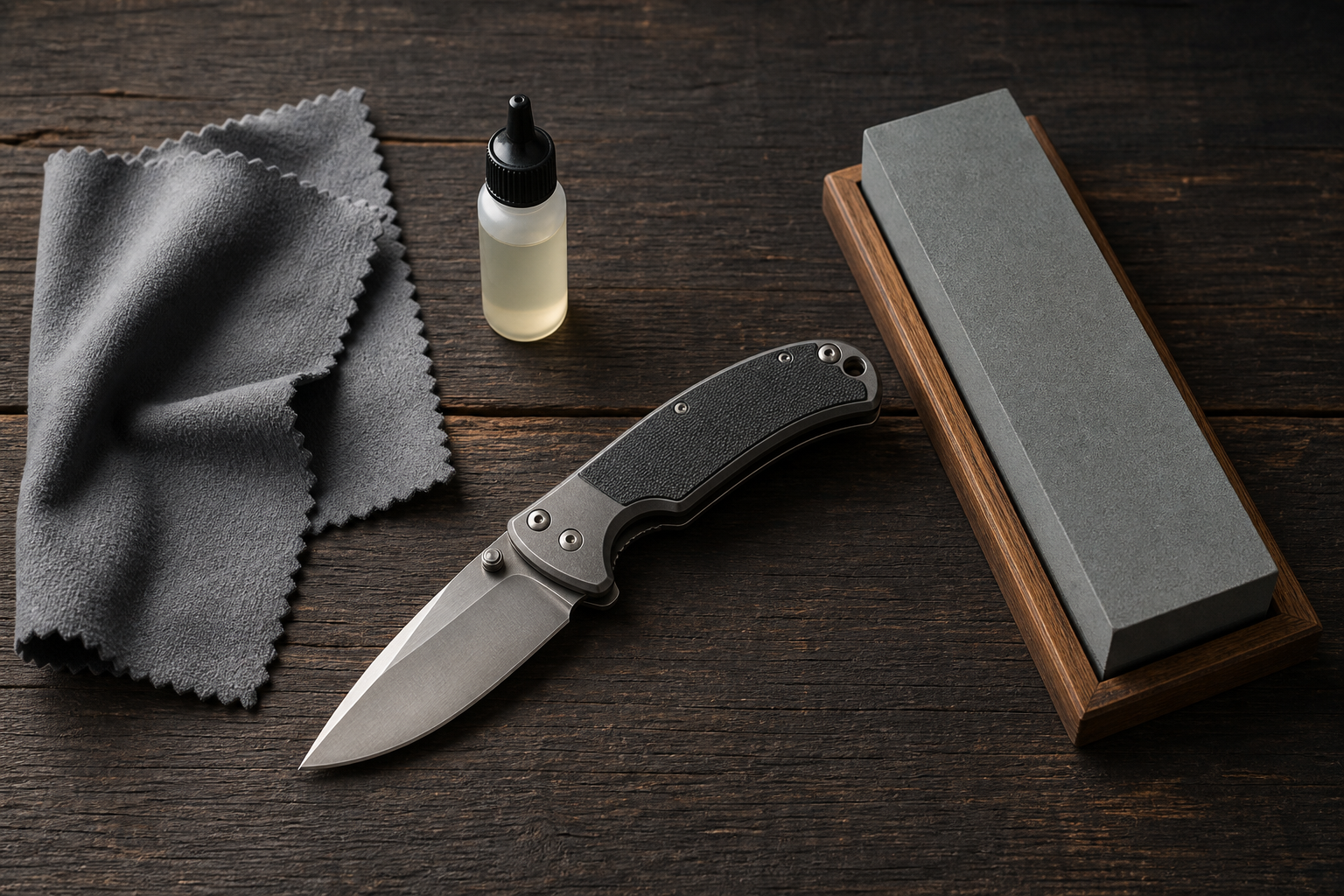
Good care helps a pocket knife remain clean, reliable and pleasant to use. Like any compact tool, it benefits from regular inspection, careful cleaning and secure storage. The right routine is simple: remove residue, keep moisture under control, maintain moving parts and address a dull edge before ordinary tasks become awkward.
After use, wipe the blade and handle with a soft cloth. If the knife was exposed to food, salt, soil or moisture, follow the manufacturer’s cleaning guidance and dry every accessible surface thoroughly. Avoid soaking folding knives unless the product instructions specifically allow it, because moisture and debris can collect around the pivot and liners.
Keep the hinge area clear. Pocket lint, dust and fine grit can make opening and closing less smooth. Use a soft brush or suitable air method to dislodge loose debris, taking care around the edge. A very small amount of manufacturer-recommended lubricant may help the pivot; excess lubricant attracts dirt and should be wiped away.
Inspect screws, scales and locking components periodically. If anything feels loose, damaged or inconsistent, stop using the knife and seek qualified help. Do not modify the lock or dismantle a knife if doing so conflicts with the manufacturer’s instructions or warranty.
A dull edge can require more force during normal cutting, so maintain it with a suitable sharpener and a controlled technique. Work slowly on a stable surface, follow the correct angle for the blade and keep fingers away from the edge path. If you are unsure, a professional sharpening service is safer than experimenting on a valued knife.
Storage is part of maintenance. Keep the knife dry in a pouch, box or controlled-access drawer, away from children and unauthorised users. Long-term leather storage may retain moisture in some conditions, so check the knife periodically. Never leave a loose knife where it can shift in a bag or be handled accidentally.
Use the knife only for tasks the model is designed to perform. Prying, hammering, turning screws with a blade or cutting powered material can damage the tool and create unnecessary risk. A well-cared-for knife is a dependable utility item because its owner respects its limits, follows local rules and stores it responsibly.
Frequently asked
What should I prioritise when choosing a pocket knife?
Choose for the real utility task, comfortable control, manageable size, maintenance and local compliance.
Can I personalise a pocket knife?
Yes, subject to the available branding area, material and artwork quality. Submit a design for review.
Ready to find your fit?
Explore compact utility options or upload a custom design for a formal quote.
Explore products ↗